
Catrina Duffy, with review and edits by Diane Haughland
October 2026
In September 2025, the Central Alberta Plant Study Group took an afternoon for a hike at Elk Island National Park to explore lichens. Well, maybe not a hike so much as a leisurely stroll as is typical of botanists. Diane Haughland and Jose Maloles of the Alberta Biodiversity Monitoring Institure (ABMI) were gracious enough to share their time and knowledge to introduce everyone to the ecology and biodiversity of the world of lichens. Here are a few highlights.
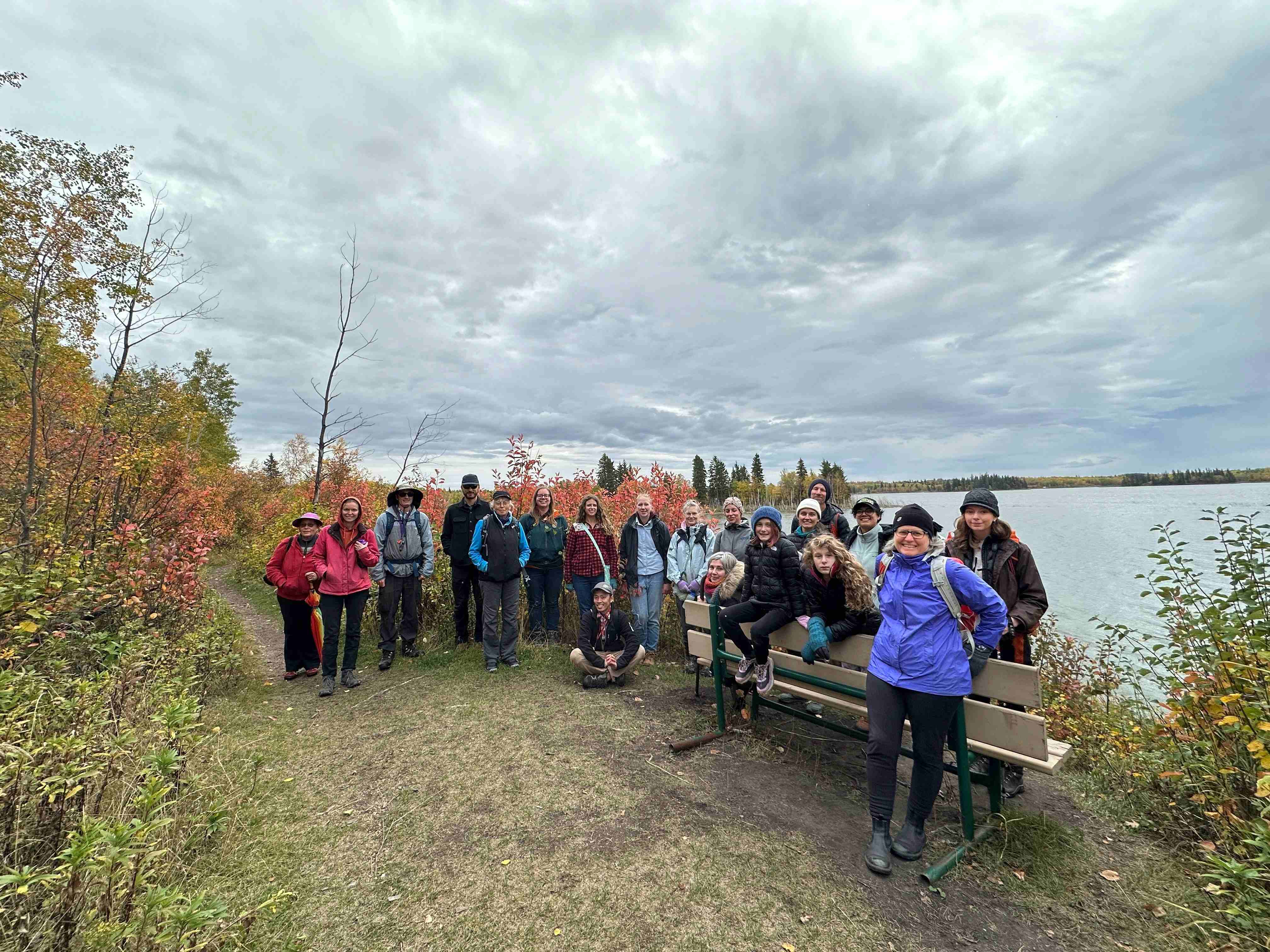
Physcia stellaris – Starry rosette lichen – squint as I like, I can’t see anything ‘starry’ about this lichen. At least it is rosette shaped (for the most part). And the dark button-like fruiting bodies (apothecia) make it distinctive.
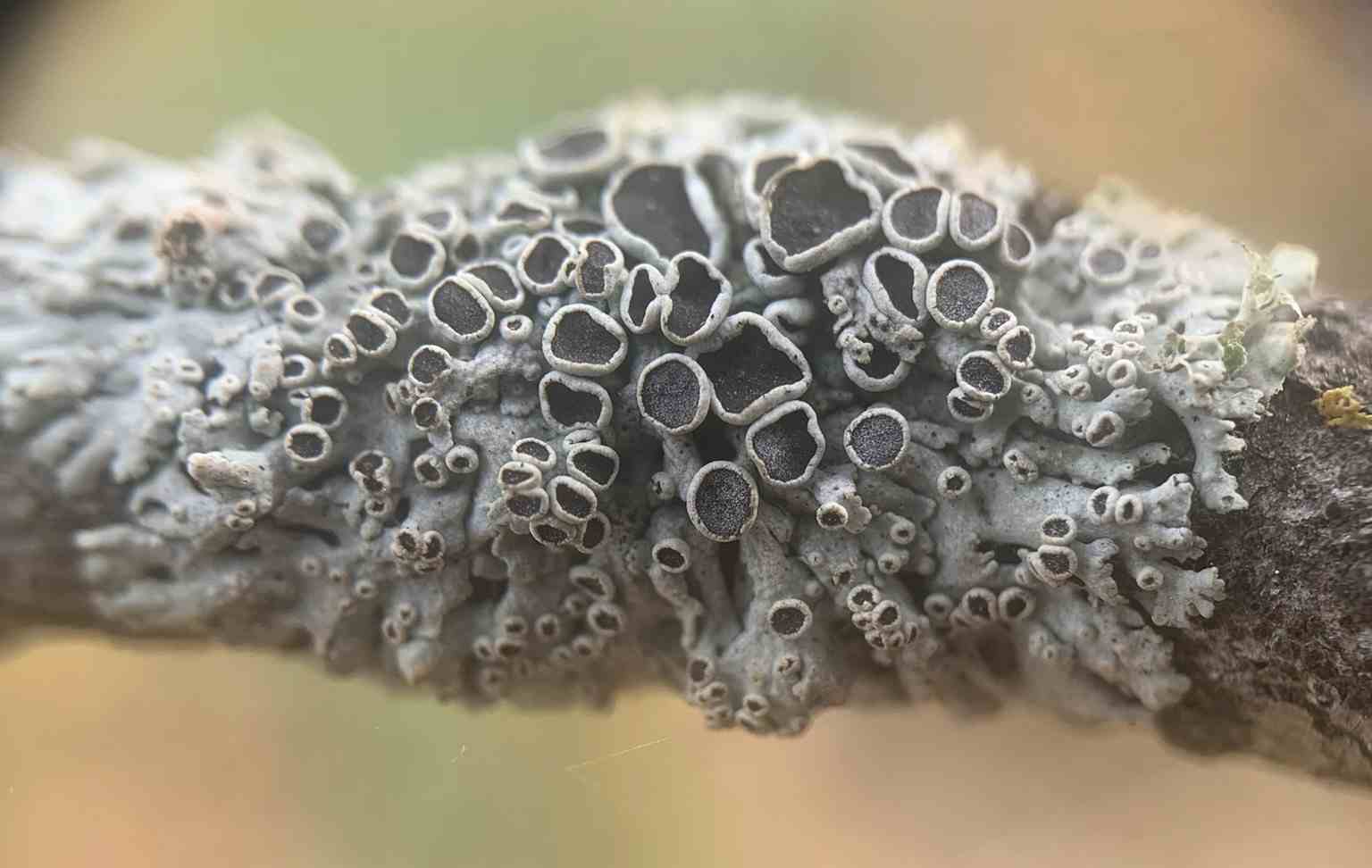
Everania mesomorpha– Boreal oakmoss – this lichen grows on more than just oak trees and is not a moss, so, as is typical in the botany realm, the common name is only 30% correct (which is technically a failing grade). Still, it is a charming little fruticose lichen covered in coarse powdery propagules (soredia). The ABMI has a plethora of information on the status of Evernia in Alberta for those enchanted by this arboreal fellow: https://abmi.ca/species/evernia-mesomorpha
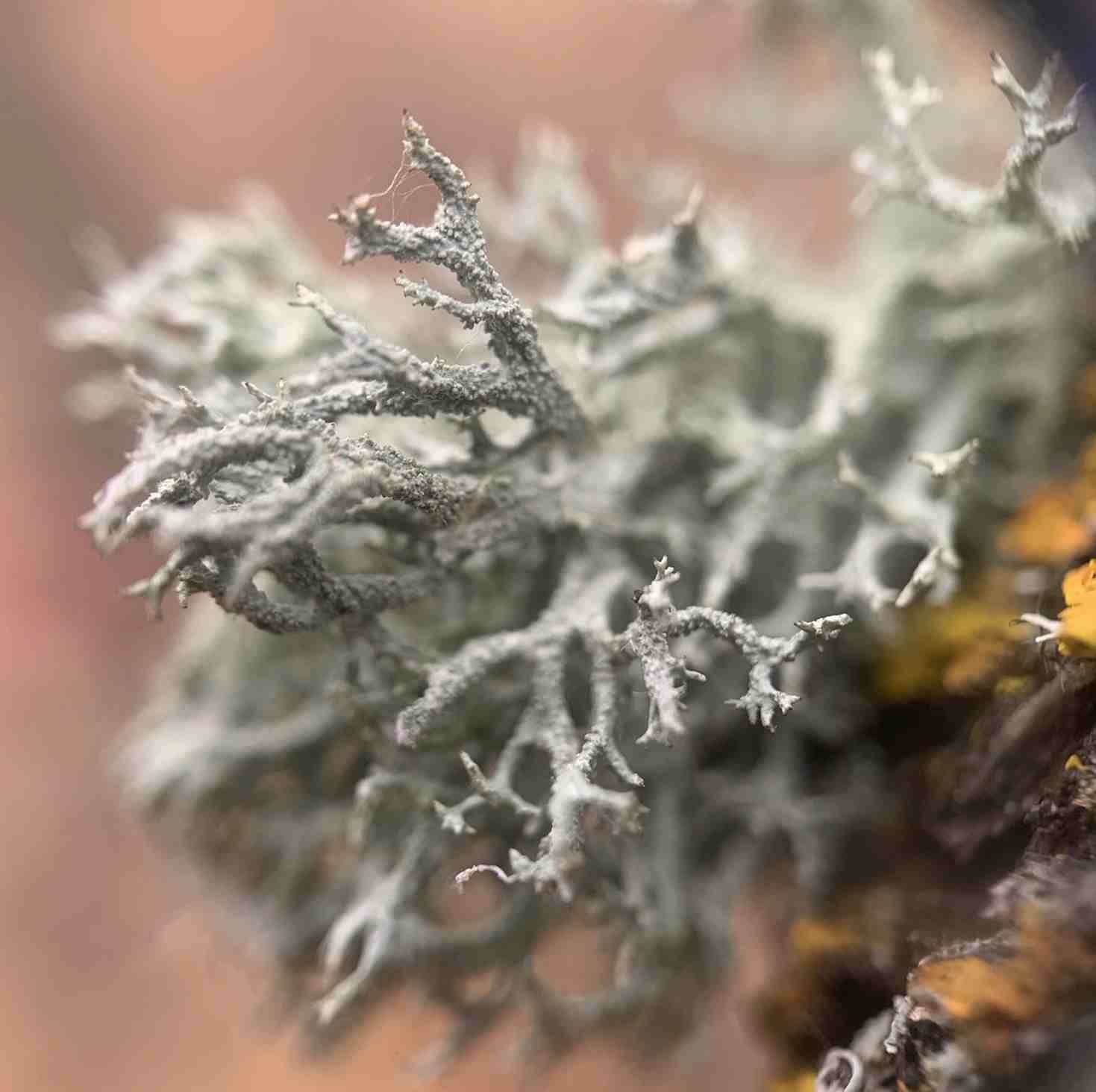
Ramalina species – Strap lichens or Cartilage lichens – Although a rather bland descriptor, it is at least accurate. And highlights the vague distinction that it is ‘flatter’ than Evernia. It also appears to be less ‘powdery’. There are 11 different species of Ramalina in Alberta, I have no idea which one this is. Ramalina is within the category of fruticose lichens, which are more sensitive to air pollution in part due to their larger surface area exposed to the air. This also means they are more common in habitats with higher humidity, like wetlands and riparian areas.
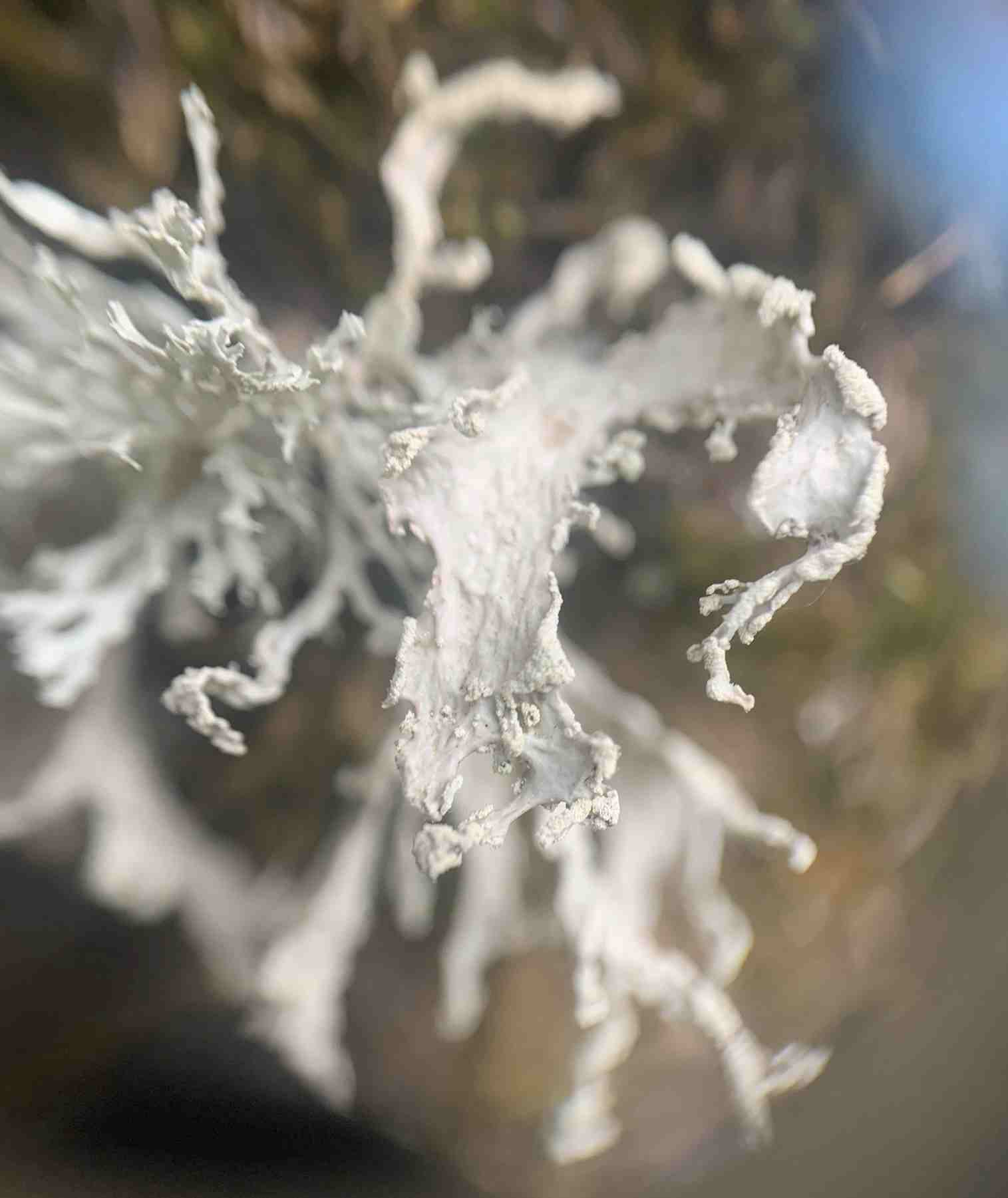
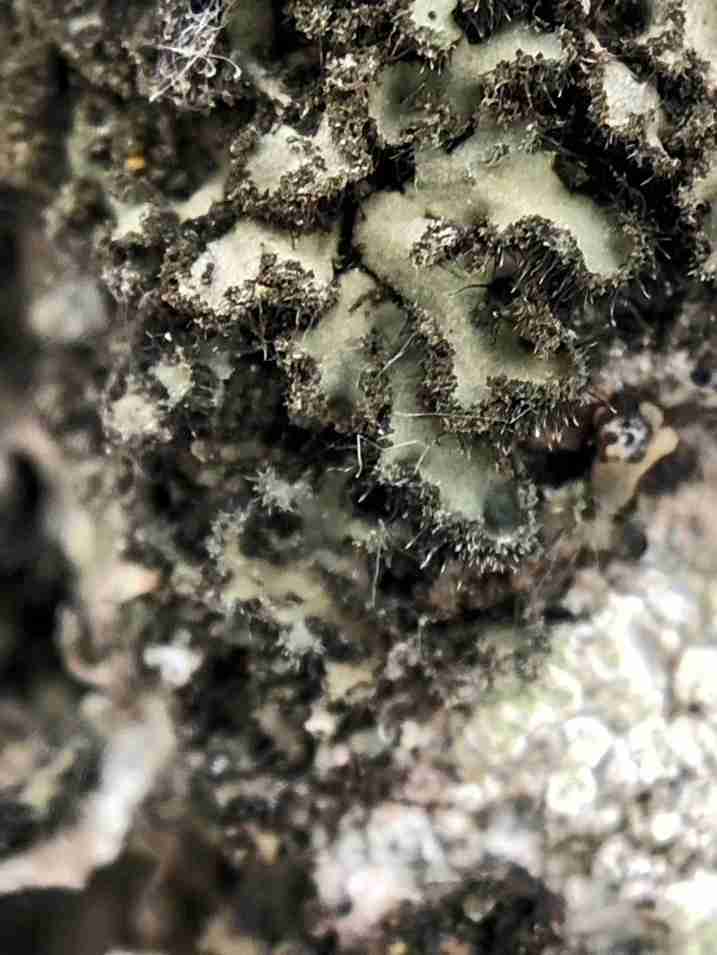
Phaeophyscia karamoi – 5 o’clock shadow lichen – I like this common name, it invokes a strong visual. It reminds me of the 5 o’clock shadow of a distinguished gentleman, like George Clooney. The hairy bits are called rhizines, as shown in this photo from iNaturalist:
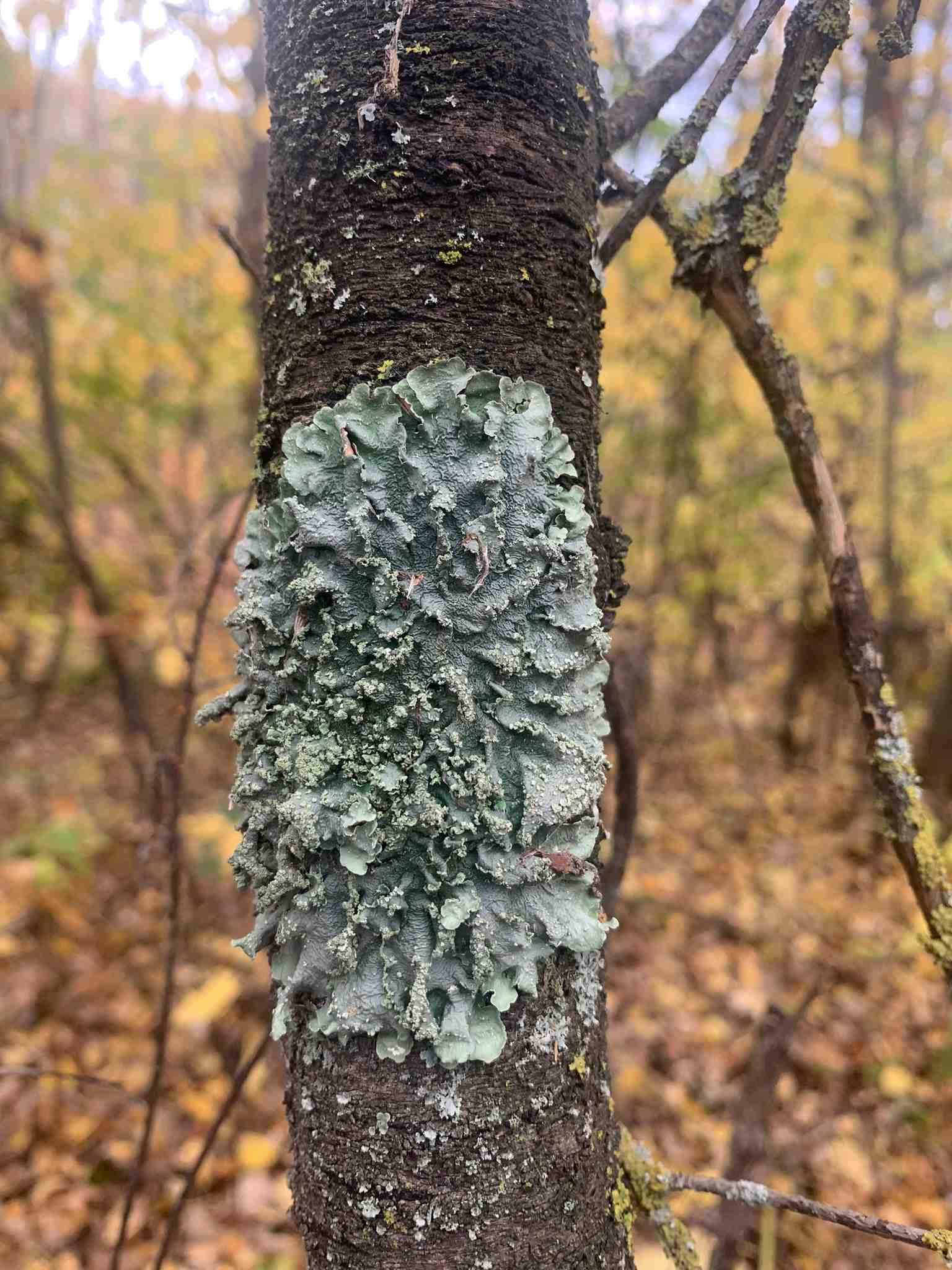
Flavopuncteila flaventior – Speckled greenshield – I give this common name a passing grade, it’s not great, but it’s fine. Its latin name is more memorable when abbreviated to Flavi-flav (do people still know who Flavor-flav is?). It is quite ubiquitous and obvious. It can be distinguished from the similar looking green starburst lichen by its tan undersurface (green starburst has a black undersurface). Also, Flavi-flav has larger ‘ruffled’ lobes, not sure why it’s so ruffled, perhaps a bird pooped on it. Per Diane Haughland, this is likely an adaptive feature, helping it increase some surface area to capture moisture and photosynthesize.
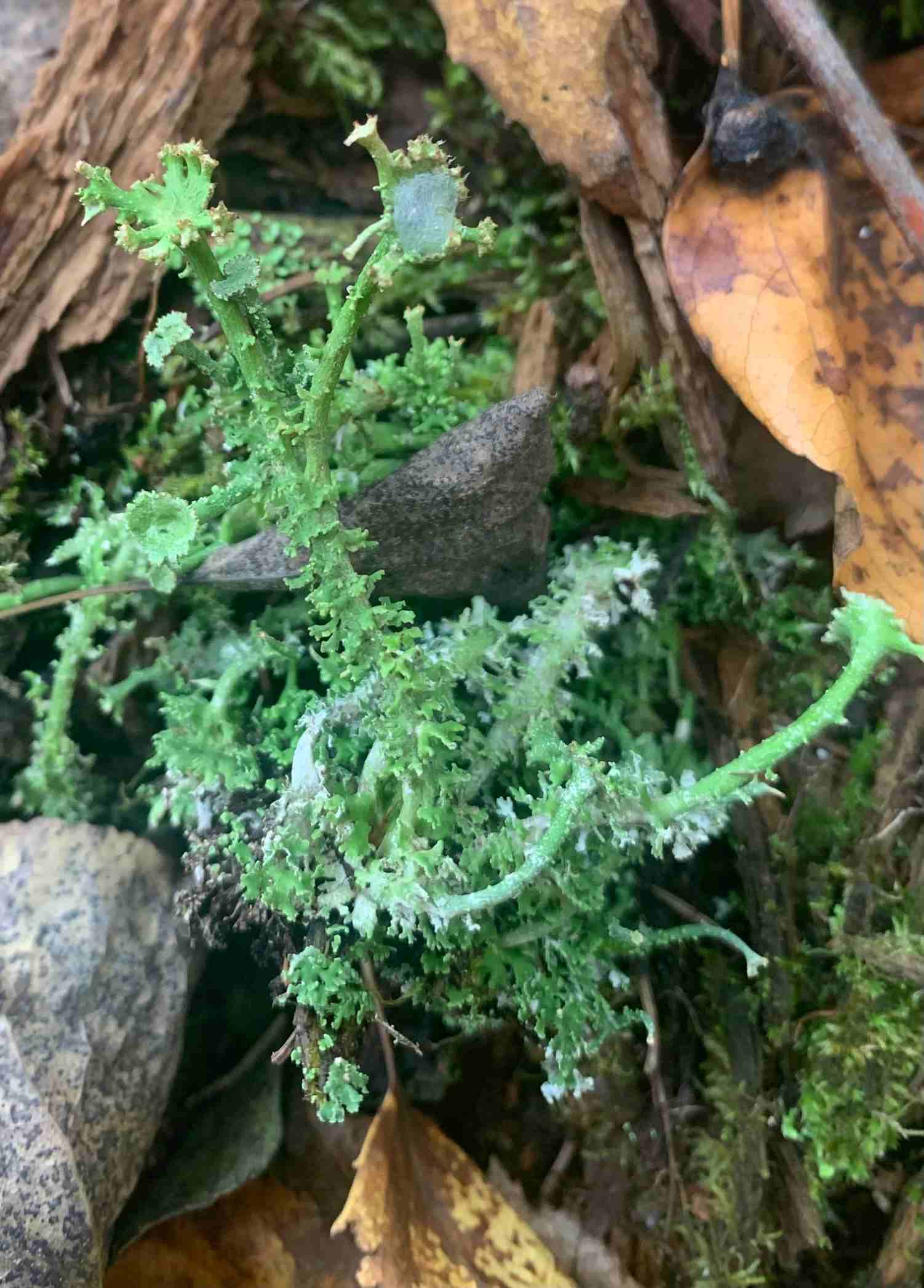
Cladonia species – Here is a photo of a wild pixie cup lichen I saw. Diane said maybe Cladonia multiformis, but either way, what a cool member of the pixie cups!
Not featured – crust lichens, reindeer lichens, and pelt lichens. All very cool members of the lichen group, but I didn’t get any good pictures of them. Sorry fellas!
If this has only wetted your thirst for lichen knowledge, here are some great additional resources. Some more overwhelming than others, but all enlightening.
Free resources for the Edmonton region:
- Getting to know our biomonitor neighbours: urban lichens and allied fungi of Edmonton: https://www.nhm2.uio.no/botanisk/lav/RLL/PDF/R43924.pdf or http://sweetgum.nybg.org/science/op/biblio_details.php?irn=484805
- Common Lichens of Edmonton: https://naturealberta.ca/edmonton-lichens/
- The Lichens of British Columbia Illustrated Keys. Part 1 – Foliose and Squamulose Species. Print on demand: https://www.crownpub.bc.ca/Product/Details/7610008784_S. Free PDF downloads: https://www.for.gov.bc.ca/hfd/pubs/docs/srs/srs08.htm
- The Lichens of British Columbia Illustrated Keys. Part 2 – Fruticose Species. Print on demand: https://www.crownpub.bc.ca/Product/Details/7610003217_S. Free PDF downloads: https://www.for.gov.bc.ca/hfd/pubs/docs/srs/srs09.htm
Additional recommended resources:
- Brodo, I. M. 2016. Keys to the lichens of North America. Revised and Expanded.Yale University Press, in collaboration with the Canadian Museum of Nature.
- Brodo, I. M., S. D. Sharnoff, and S. Sharnoff. 2001. Lichens of North America. Yale University Press, New Haven and London. The most recent printing is preferred, but used versions are still excellent resources. Corrections to earlier editions are found at http://www.lichen.com/book.html.
- Images, papers, keys: https://www.waysofenlichenment.net/
- Herbaria consortium with images and species descriptions for some species: https://lichenportal.org/portal/
- Checklist of known North American lichens north of Mexico: https://www.ndsu.edu/pubweb/~esslinge/chcklst/chcklst7.htm
- Info on all the taxa ABMI monitors, including lichens, with maps, habitat models, and for some, images and supporting text: https://beta.abmi.ca/biobrowser