
By Natalia Gaia
May 2026
Red Deer’s Maskepetoon Park is a beloved local retreat from the cityscape. Home to a diverse array of flora and fauna both familiar and rare, the area is noted for boasting a fragile tamarack fen ecosystem—an uncommon sight in the surrounding prairie ecosystem, and an integral part of the river valley park’s distinct vegetation.
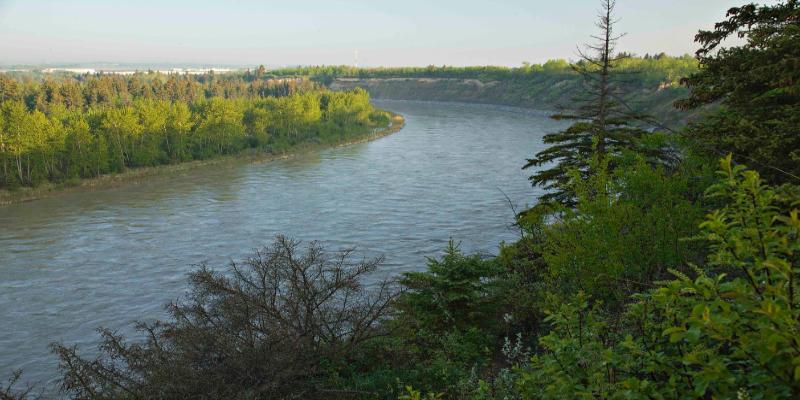
Maskepetoon Park (c) City of Red Deer
In September 2026, ANPC members helped conduct a biodiversity survey of the park. Local naturalist Tony Blake and Edmonton-based plant biologist Kallum McDonald proved invaluable in surveying a rich array of lifeforms, including a possible sighting of the elusive longleaf pondweed, Potamogeton nodosus (S1).
The survey’s results are documented on iNaturalist, where you’re sure to come across plenty of beautiful orchids, violets, and even some delightfully ravenous bladderworts. The diversity can be observed first-hand on the park’s designated nature trails, where you’re also likely to encounter curious creatures winged and pawed.


Left to right: Northern bog aster (Symphyotrichum boreale), suspected floating leaved pondweed (Potamogeton natans), northern bog violet (Viola nephrophylla) and sparrow’s egg lady’s slipper (Cypripedium passerinum).
Beyond the park’s serenity, there are hidden threats; indeed, the survey’s results are an important part of ongoing efforts to safeguard Maskepetoon park from planned construction. While long viewed as a unique natural area, thirty hectares of the park are set to become tarmac as Alberta looks to expand Highway 2 from four lanes to eight lanes. The first phases of construction are slated for 2027, prompting wide-ranging concerns from locals about potential wildlife disturbance and the loss of critical wetlands.
Maskepetoon is a vital wildlife corridor. It is also a designated “pollinator park” and managed as such, with a focus on untamed shrubbery and zero pesticide use. Alongside the tamarack fen, other plant communities include marshes (featuring beavers!), willow swamps and balsam poplar forests. Conservationists point to this great diversity as grounds for protection, and hope that increased awareness of the park’s ecology will aid in its preservation.
The recent biodiversity survey provides a solid foundation for more surveys and could help inform mitigation practices such as plant rescues. There are also plans to include this site in the May Plant Count for 2026 – hopefully just one of many future efforts!