
August 2026
ANPC is pleased to formally announce that Celina Waldron was awarded the 2026 Student Bursary in memory of Past President Leslie Monteleone. Celina is an MSc student in Conservation Biology at the University of Alberta and will be using her bursary funds to purchase a dissecting microscope to support her research efforts. Her project is entitled How low is “low-impact”? Assessing disturbance severity of low-impact seismic lines on bryophyte communities in Alberta’s boreal peatlands. A synopsis of her research plans is below.
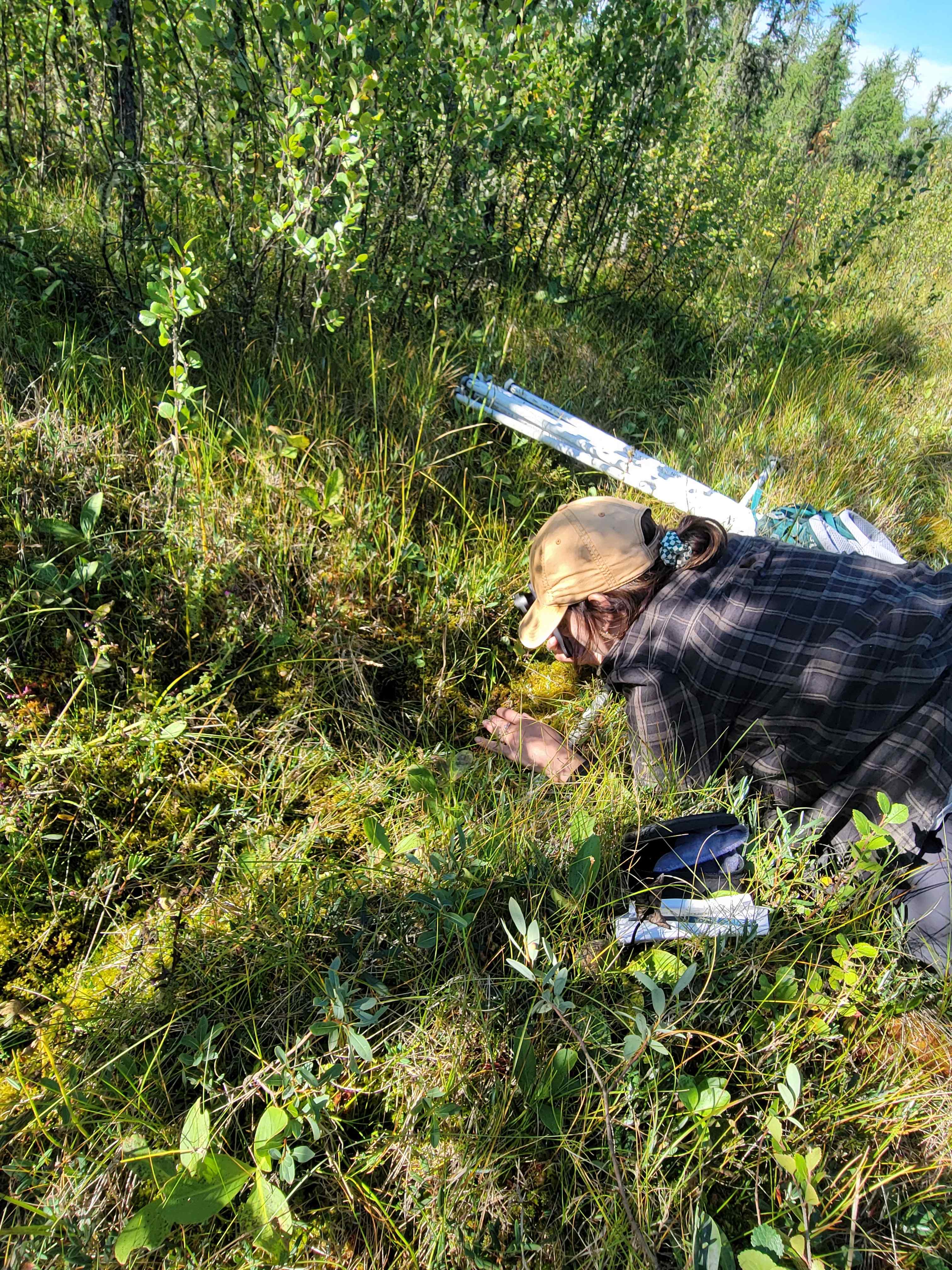
Alberta’s boreal is vastly fragmented by seismic lines – corridors cleared for oil exploration. In peatlands,
seismic lines persist for decades with little tree regrowth. Current “low-impact” seismic (LIS) methods are assumed to reduce disturbance footprint, yet they are created at much higher densities than older, conventional lines. Environmental changes extending into the adjacent forest known as edge effects further increase this footprint.
Bryophytes (mosses, liverworts) are foundational to peatlands, forming the soil and supporting the establishment of other plants, including trees used to measure recovery. This study examines edge effects of LIS lines on bryophyte diversity and composition boreal peatlands. By comparing LIS and conventional lines, this research evaluates whether LIS methods truly reduce disturbance severity as their name suggests. The results will advance our understanding of the ecological footprint of LIS lines and may guide improvements to industry practices.
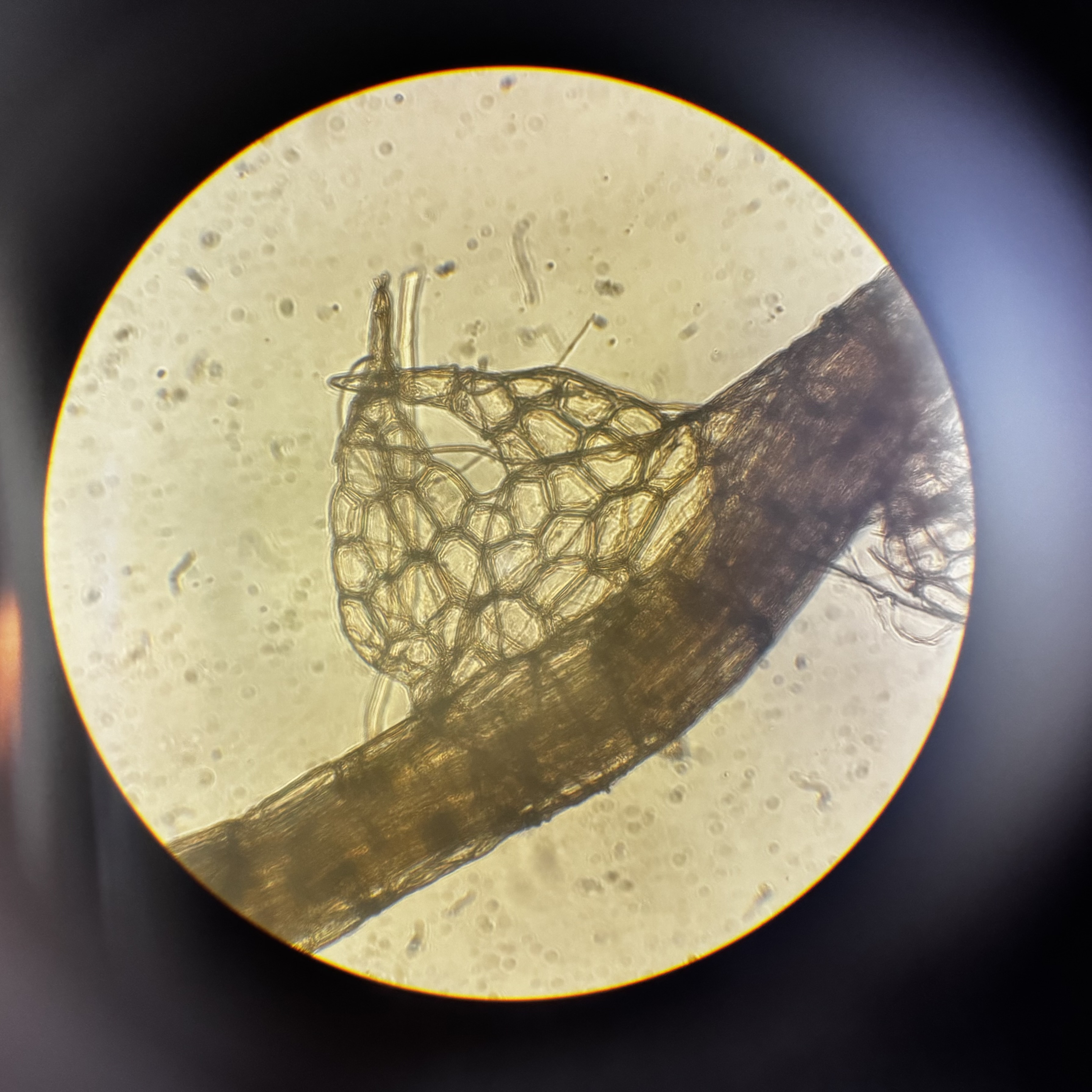
microscope.
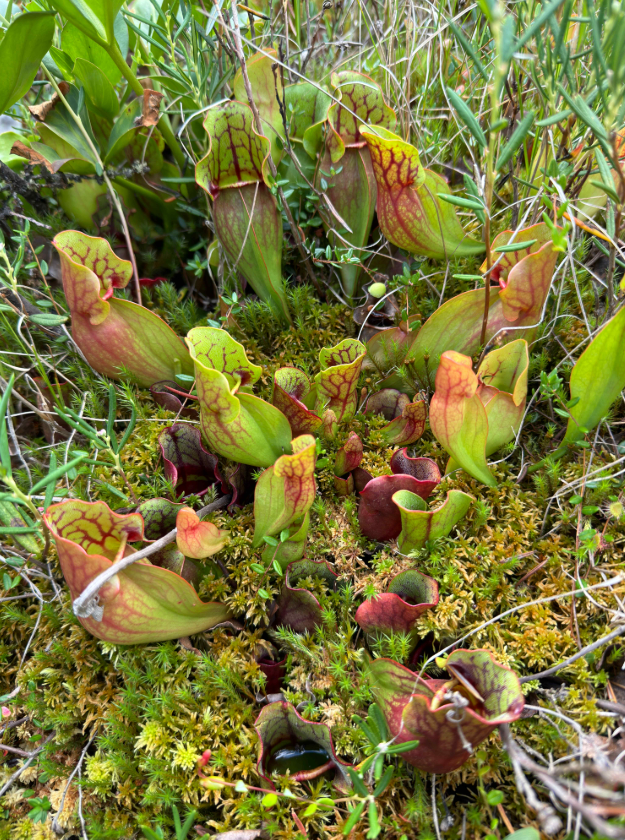
by a beautiful Sphagnum hummock.

Research Objectves:
This research aims to address a key knowledge gap on the impacts and edge effects of LIS lines on bryophyte diversity and composition in peatlands.
Question 1: How do LIS lines and their edge effects influence bryophyte diversity and composition in treed bogs and fens compared to the undisturbed reference peatlands?
Hypothesis: LIS lines and edges will comprise distinct bryophyte communities as canopy gaps and soil compaction alter light, temperature and moisture levels relative to the intact peatland.
Question 2: How do bryophyte diversity, composition, and edge effects compare between conventional and LIS lines in treed fens?
Hypothesis: LIS lines will show less community variation and lesser edge effects than conventional lines because the narrower line width and lighter equipment reduce canopy gaps and soil compaction.
This research addresses a fundamental knowledge gap regarding the ecological footprint of LIS lines in
peatlands and our understanding of post-disturbance recovery in terms of bryophyte composition, which is critical in peatlands as bryophytes form the substrate required for native plant establishment and growth. The findings may have important implications for Woodland Caribou habitat management, potentially guiding future improvements to seismic line construction methods that better preserve the ground substrate conditions and support tree regeneration.